
The Baby Face has 18 raised sections; the eyes are wide because some self-proclaimed holy man wearing a collar just touched him in a way he shouldn’t have. The binky has seven sections; the hair on his head has seven strands. Like his Father, no matter how you look at him, he remains the same. Matthew is where we first encounter the Most High. In chapter 18, he addresses children in the first 14 verses of Matthew 18; count the hairs, people. God knows the number of hairs on your head as well.
There is no direct mention of Baby EL; however, it’s easy to follow the actions of the few who win the most. Jesus began his seven years of harvest, and it was cut short; if my math is right, 3.5 years is half of seven.
Baby EL is born out of adversity; he comes long after the angels and the rebellion in heaven, where 1/3 of the angels follow the bringer of light, the covering cherub meant to protect the kingdom and the light he carried. Created with every ornate and precious stone to reveal to the congregation of Angels who murmured against worshipping the Son of Man before the creation of man, they saw no value in doing so… So God created value to reveal the Son’s worth. Still, many were insistent on seeing the face of the Most High God, whom the Father consistently insisted that when the trumpet was blown, they came to worship HIM (before man).
The warning was to look on the face of God; one would surely die…Angels say what? What is death? God does not say, “Let me make man, and I will show you.” Instead, he creates what we call the dinosaurs. So what came first, the egg or the dinosaur??
Death was here before man was here; those dinosaurs protected their young much better than we do. If the serpent was in the garden, death was here. Man’s disobedience sided him with the serpent.
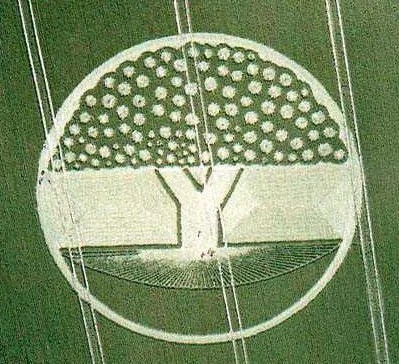
There are 94 fruit positions the same amout you would find in the atomic number for plutonium.
Upside down, it is a giveaway we see a mushroom cloud.
Do you like having this knowledge? I do not. Not at all!
Psalms 94:1-23
(1) O LORD God, to whom vengeance belongeth; O God, to whom vengeance belongeth, shew thyself.
(2) Lift up thyself, thou judge of the earth: render a reward to the proud.
(3) LORD, how long shall the wicked, how long shall the wicked triumph?
(4) How long shall they utter and speak hard things? and all the workers of iniquity boast themselves?
(5) They break in pieces thy people, O LORD, and afflict thine heritage.
(6) They slay the widow and the stranger, and murder the fatherless.
(7) Yet they say, The LORD shall not see, neither shall the God of Jacob regard it.
(8) Understand, ye brutish among the people: and ye fools, when will ye be wise?
(9) He that planted the ear, shall he not hear? he that formed the eye, shall he not see?
(10) He that chastiseth the heathen, shall not he correct? he that teacheth man knowledge, shall not he know?
(11) The LORD knoweth the thoughts of man, that they are vanity.
(12) Blessed is the man whom thou chastenest, O LORD, and teachest him out of thy law;
(13) That thou mayest give him rest from the days of adversity, until the pit be digged for the wicked.
(14) For the LORD will not cast off his people, neither will he forsake his inheritance.
(15) But judgment shall return unto righteousness: and all the upright in heart shall follow it.
(16) Who will rise up for me against the evildoers? or who will stand up for me against the workers of iniquity?
(17) Unless the LORD had been my help, my soul had almost dwelt in silence.
(18) When I said, My foot slippeth; thy mercy, O LORD, held me up.
(19) In the multitude of my thoughts within me thy comforts delight my soul.
(20) Shall the throne of iniquity have fellowship with thee, which frameth mischief by a law?
(21) They gather themselves together against the soul of the righteous, and condemn the innocent blood.
(22) But the LORD is my defence; and my God is the rock of my refuge.
(23) And he shall bring upon them their own iniquity, and shall cut them off in their own wickedness; yea, the LORD our God shall cut them off.
So let’s get back to after the rebellion: Lucifer and his cronies begin building their new world order, complete with symbols we can now see are the mascots for each team. The all-seeing pyramid, a king-of-the-hill idea, and the lion lying out in front where shadows fall upon him. Let’s call this one “The Lion of the Tribe of Judah,” after wiping out the dinosaurs who helped him build the seventh wonder of the world with his nonverbal comment to man that he is going to make the Son of God his pet. God allows time to pass because, at some point, man will need fossil fuels. Could it be the same creatures who helped him build this atrocity that God is using to expose him today?
So the biggest lie that led the rebellion was “God has no Son,” so after Cain killed Abel, Baby EL was born, promoting hope among the angels that the Son of God will be coming; the Baby will do for now. They are ancient spirits; this is the first earth man in the heavens for them, evidence that a SON of God is certain. In America, the first man into the heavens is found in Derry, NH, and he went up briefly and came back. The church is going up briefly and coming back after the enemy has his seven years.
Baby EL could say, “Before Abraham I am.” Jesus could say Before Adam He is but sadly Baby EL cannot, for he is from the seed of Adam. In Genesis 10, at the Tower of Babel, is God talking to his unborn son, or who was the first principality he placed over this city Baby EL?
EL refers to GOD in several passages.
El Elyon — “God Most High”
Emphasizes God’s supremacy and sovereignty.
Genesis 14:18–22; Deuteronomy 32:8; Isaiah 14:14
El Olam — “Everlasting God”
Stresses God’s eternal nature.
Genesis 21:33
El Roi — “God Who Sees”
The name Hagar uses when God sees her suffering.
Genesis 16:13
El‑Berit — “God of the Covenant”
Connected to covenant faithfulness.
Judges 9:46
El‑Elohe‑Israel — “God, the God of Israel”
Jacob names an altar with this title after returning to Canaan.
Genesis 33:20
Bethel — “House of God”
A place-name built on El, marking where Jacob encountered God.
Genesis 28:19
These El names are compound titles, each revealing a facet of God’s nature—His sovereignty, eternity, compassion, covenant loyalty, and relational identity with His people.
They appear across Genesis, Judges, and the prophets, often tied to pivotal moments of revelation or covenant.
Other –el names you might recognize
Here are more biblical or traditional names built on ‑el:
Emmanuel — “God with us”
Ishmael — “God hears”
Bethel — “House of God”
Peniel — “Face of God”
Jezreel — “God sows”
Elijah (starts with El, not ends) — “My God is Yahweh”
Elisha — “God saves”
Major Biblical Names Ending in –el (and their meanings)
1. Daniel — דָּנִיֵּאל — “God is my judge”
Dan = judge
El = God
A declaration of God’s justice.
2. Gabriel — גַּבְרִיאֵל — “God is my strength” / “Mighty one of God”
Gavri = strength/might
El = God
Often associated with messages requiring courage.
3. Michael — מִיכָאֵל — “Who is like God?”
This is a rhetorical question: No one is like God.
Michael’s name itself is a theological challenge.
4. Raphael — רְפָאֵל — “God heals”
Rafa = heal
El = God
A name tied to restoration and mercy.
5. Uriel — אוּרִיאֵל — “God is my light”
Ur = light
El = God
Often associated with illumination or revelation.
6. Azrael — עֲזְרִיאֵל — “God helps”
Azar = help
El = God
A name of comfort, though later traditions associate it with the angel of death.
7. Samuel — שְׁמוּאֵל — “God has heard”
Shama = hear
El = God
A statement of answered prayer.
8. Ezekiel — יְחֶזְקֵאל — “God strengthens”
Chazaq = strengthen
El = God
A prophetic name tied to resilience.
What about Lucifer / Lucifel? My two cents ..(kind of gives it away, to err is human to forgive is divine)
“Lucifer” is Latin, not Hebrew.
But Lucifel (or Luciel) is a later invention that tries to imitate Hebrew angelic naming patterns.
If you break it down:
Luci (from Latin lux) = light
El = God
So Lucifel would mean something like “Light of God” or “God’s light.”
This is not a biblical Hebrew name — it’s a hybrid created in later literature, especially medieval angelology and modern fiction.
Why angels often end in –el
In Hebrew tradition, angels are messengers of God, so their names describe:
their function
their relationship to God
or a divine attribute they embody
Thus:
Gabriel = strength of God
Michael = who is like God
Raphael = healing of God
Babel = confusion (really?)
It’s not just poetic — it’s theological branding.
📜 Other –el names you might recognize
Here are more biblical or traditional names built on ‑el:
Emmanuel — “God with us”
Ishmael — “God hears”
Bethel — “House of God”
Peniel — “Face of God”
Jezreel — “God sows”
Elijah (starts with El, not ends) — “My God is Yahweh”
Elisha — “God saves”
Names and their meanings credit to Co-Pilot AI.